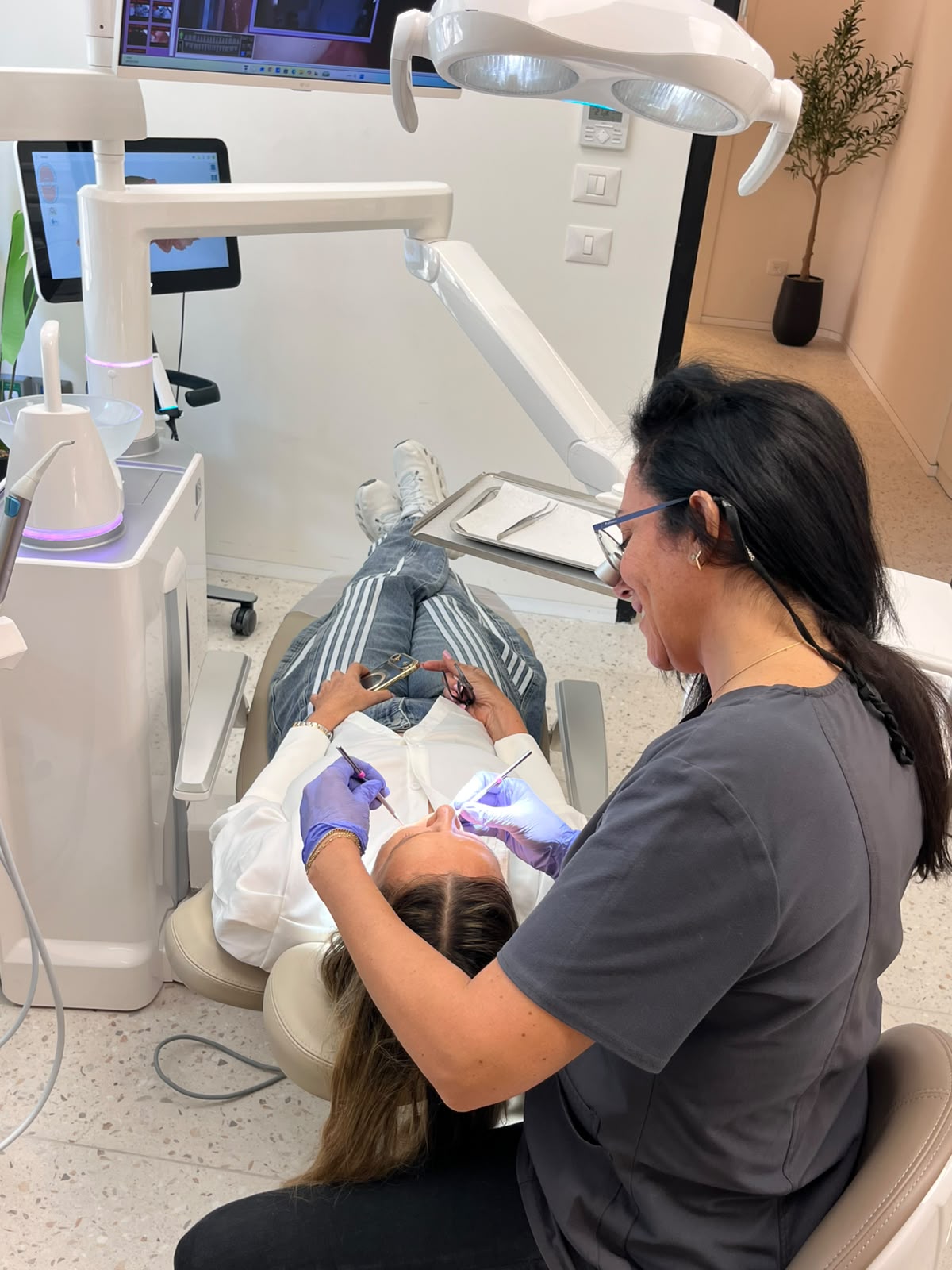
Wisdom teeth are the third molars, the last teeth at the back of the mouth. They usually erupt between the ages of 17 and 25. Many people don’t have enough room in the jaw for them, so they get stuck, grow in at an angle, or only partly come through.
The position of the tooth and the shape of its roots affect how it is removed. Treatment is planned after an individual assessment.
01
A fully erupted tooth
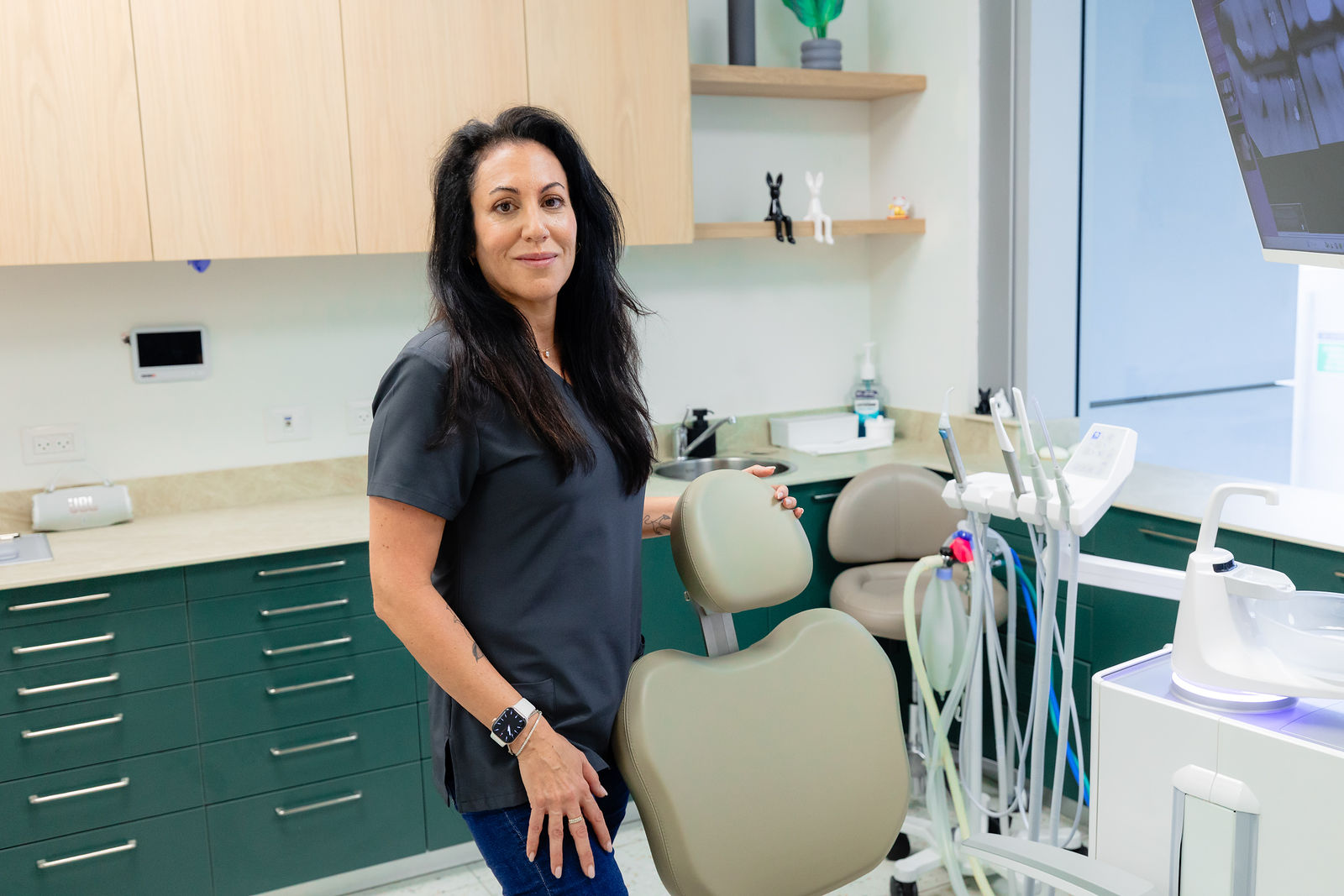
The tooth is visible in the mouth. In many cases, removing it is fairly straightforward, much like a routine extraction, depending on the tooth and root anatomy. Dr. Meytal believes in preventive care and treats only when needed.
02
A partially impacted tooth
The tooth has only partly come through and is still partly covered by gum or bone. Removal may require a surgical approach.
03
An impacted tooth
The tooth remains within the bone or under the gum. Removing it is a surgical procedure that involves opening the gum and sometimes sectioning the tooth to limit injury to the surrounding tissues.
When should you book an assessment?
Pericoronitis: when the gum gets inflamed
When a wisdom tooth only partly erupts, a gum pocket forms over it that is hard to clean. Food and bacteria collect there and can cause repeated infections, pain, swelling, bad breath and sometimes difficulty opening the mouth. This is called pericoronitis, and it’s one of the common reasons for removing wisdom teeth.
Not every wisdom tooth needs to be removed. The decision follows an examination and X-rays, taking the tooth and surrounding tissues into account.
Before deciding, you receive an explanation of the options, treatment stages and costs.
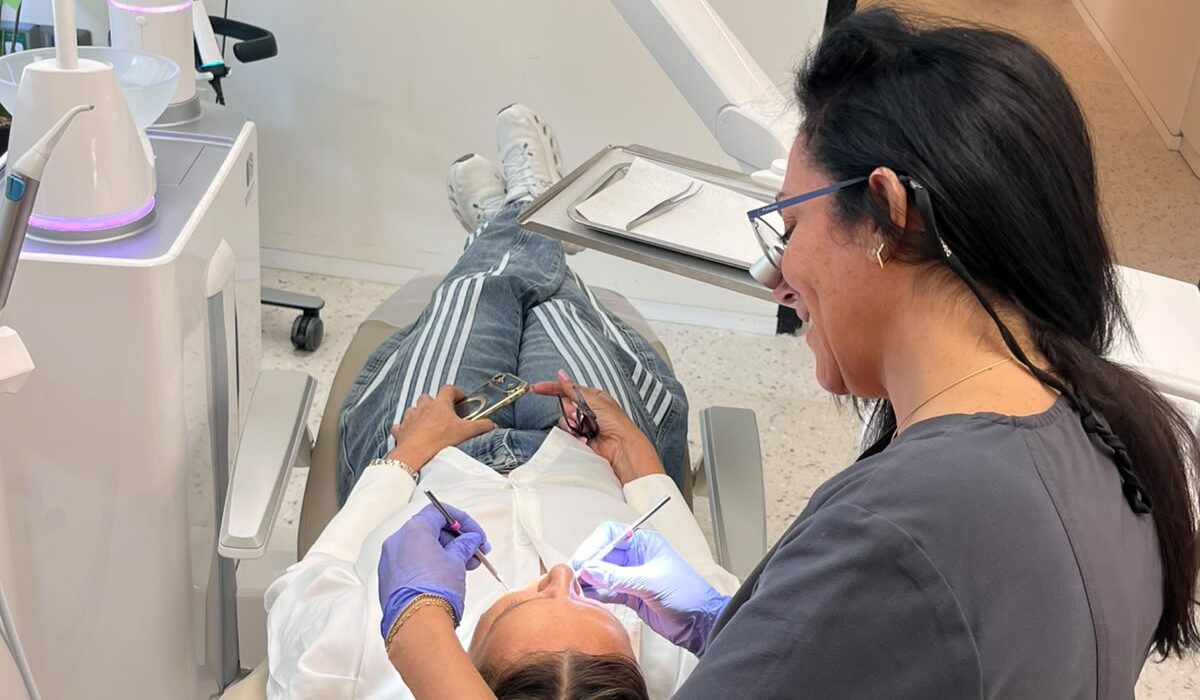
Dr. Meytal Salman · Dental Studio TLV
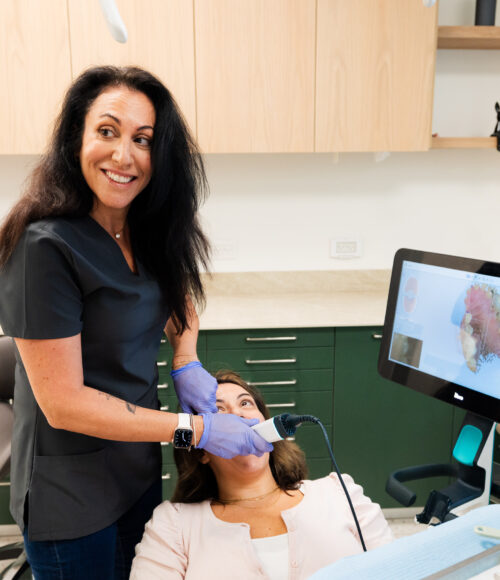
Imaging and planning before removal
Why is an X-ray important?
The inferior alveolar nerve runs through the lower jaw and provides sensation to the lower lip, chin and lower teeth. Before removing a lower wisdom tooth, a panoramic X-ray helps assess where the roots are in relation to this nerve.
If the roots appear close to the nerve, a dental CT scan (CBCT) may also be needed. This gives a three-dimensional view to help plan treatment and choose an appropriate approach.
Coronectomy: when leaving the roots may be safer
In selected cases, when the roots lie very close to the nerve and full removal carries a higher risk of injury, a coronectomy may be considered. Only the crown, the upper part of the tooth, is removed, while the roots are left in place.
The aim is to address the problem while reducing the risk of nerve injury. It does not eliminate this risk and is not suitable for every tooth. Follow-up is needed, and the retained roots may sometimes require further treatment.
Recovery after wisdom tooth removal
You will receive individual aftercare instructions. Recovery depends on the complexity of the extraction and your general health.
01
The first few days
Swelling and discomfort are common for the first two to three days. Use cold compresses and pain relief according to your individual instructions.
02
Soft food, not hot
Eat soft, lukewarm food on the first day. Continue with soft food while chewing is uncomfortable.
03
Protect the healing area
Don't smoke or drink through a straw for the first few days, following the instructions you receive.
04
Cleaning and follow-up
Keep up gentle oral hygiene as instructed and attend a follow-up appointment when advised.
If bleeding does not stop, pain or swelling gets worse, or you develop a fever, seek a prompt dental assessment.
The procedure is done under local anaesthetic. Afterwards, pain is usually managed with pain relief, following your instructions and taking your medical history into account.
Most people return to their routine within a few days to a week. Recovery may take longer after a complex extraction, and some pain or swelling can last up to around two weeks.