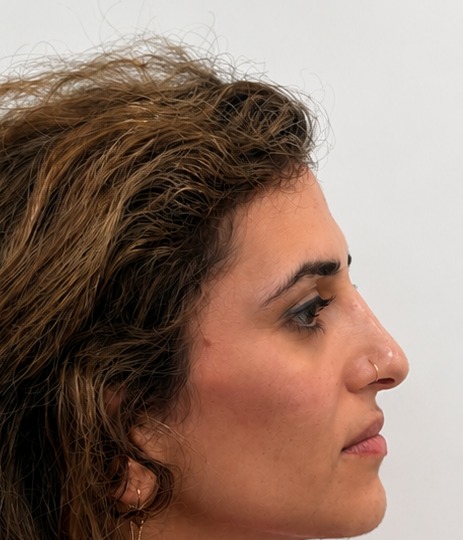
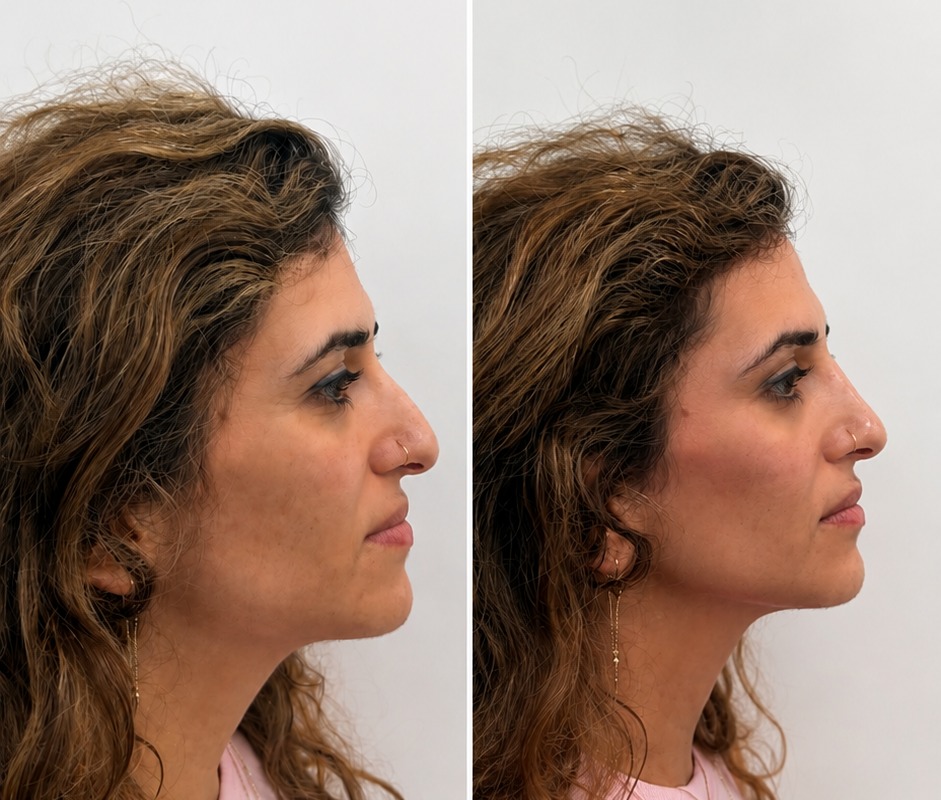
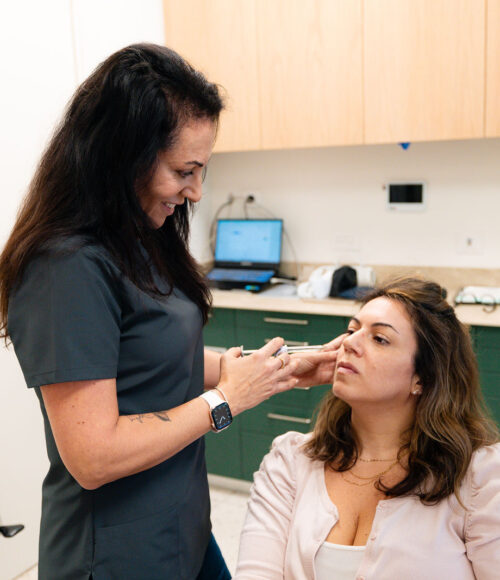
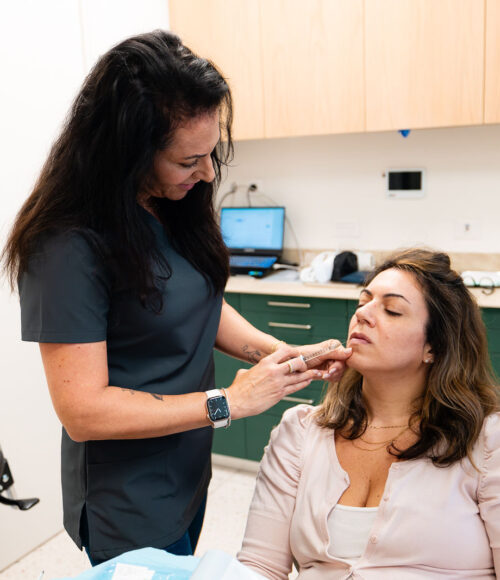
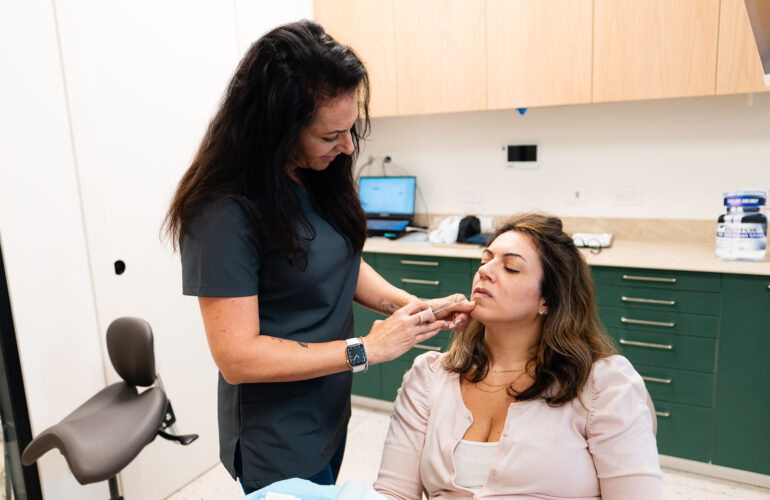
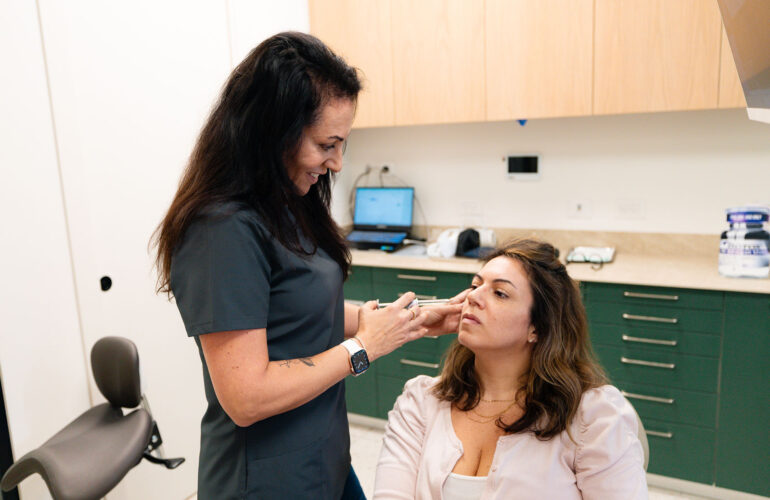
Refining the shape of the nose with hyaluronic acid filler, without incisions or general anaesthesia. Treatment takes about 20 to 30 minutes, the result is visible straight away and most people return to their routine almost immediately.
Suitability is determined at an individual examination. These signs alone are not a diagnosis.
01
A small bump on the bridge of the nose
02
A drooping nasal tip
03
Mild asymmetry of the nose
04
A profile that feels out of balance
Four stages, a clear plan
Filler adds volume and refines shape, but it does not make the nose smaller. For a smaller nose or a structural change, a plastic surgeon is the right specialist.
01
Consultation
We discuss what bothers you, examine, take photos and explain what can be achieved.
02
Preparation
The area is cleaned and a numbing cream is applied.
03
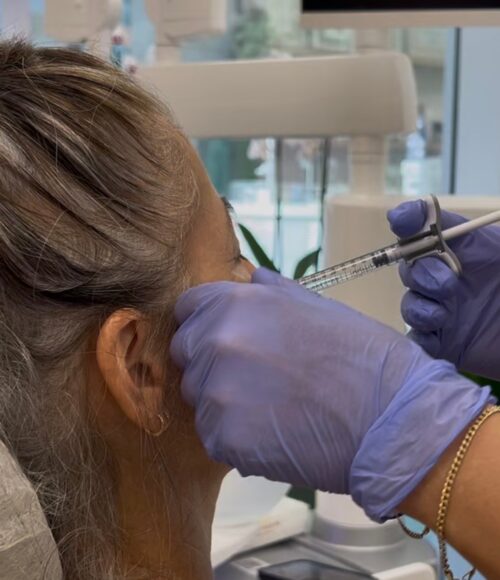
Precise injection
Small amounts of filler, added gradually while the result is checked.
04
Aftercare
Back to your routine almost immediately, with clear guidance for the first days.
Why Dr. Meytal
An area that demands deep anatomical knowledge
Because of its blood supply, the nose is one of the most delicate areas to treat in the face. Dr. Meytal Salman is a dentist with around 20 years of experience and a University of Toronto graduate who has completed dedicated training in aesthetic treatments, including Botox and dermal fillers.
Her knowledge of facial and jaw anatomy, including blood vessels and nerves, supports precise treatment and early recognition of complications. If the treatment is not right for you, she will tell you honestly.
Hyaluronic acid can be dissolved with an enzyme, so the treatment is reversible. Results usually last around 12 to 18 months.
No. Filler adds volume and changes the shape through an optical effect. For a smaller nose or a structural change, you should consult a plastic surgeon.
Swelling and bruising are common and usually settle within a few days. The most serious risk is a blocked blood vessel, which can affect blood flow to the skin and, very rarely, vision. Asymmetry, lumps, infection or an allergic reaction are also possible. An experienced doctor reduces these risks and knows how to recognise and treat complications immediately.
For the first few days, avoid pressure on the nose such as heavy glasses, intense exercise and heat exposure. If you notice unusual pain, a change in skin colour or any visual disturbance, contact us immediately.
The treatment is usually not performed during pregnancy or breastfeeding, with an active infection in the area or after a previous allergic reaction. After previous nose surgery, an assessment is needed first. Every case is reviewed individually at the consultation.