
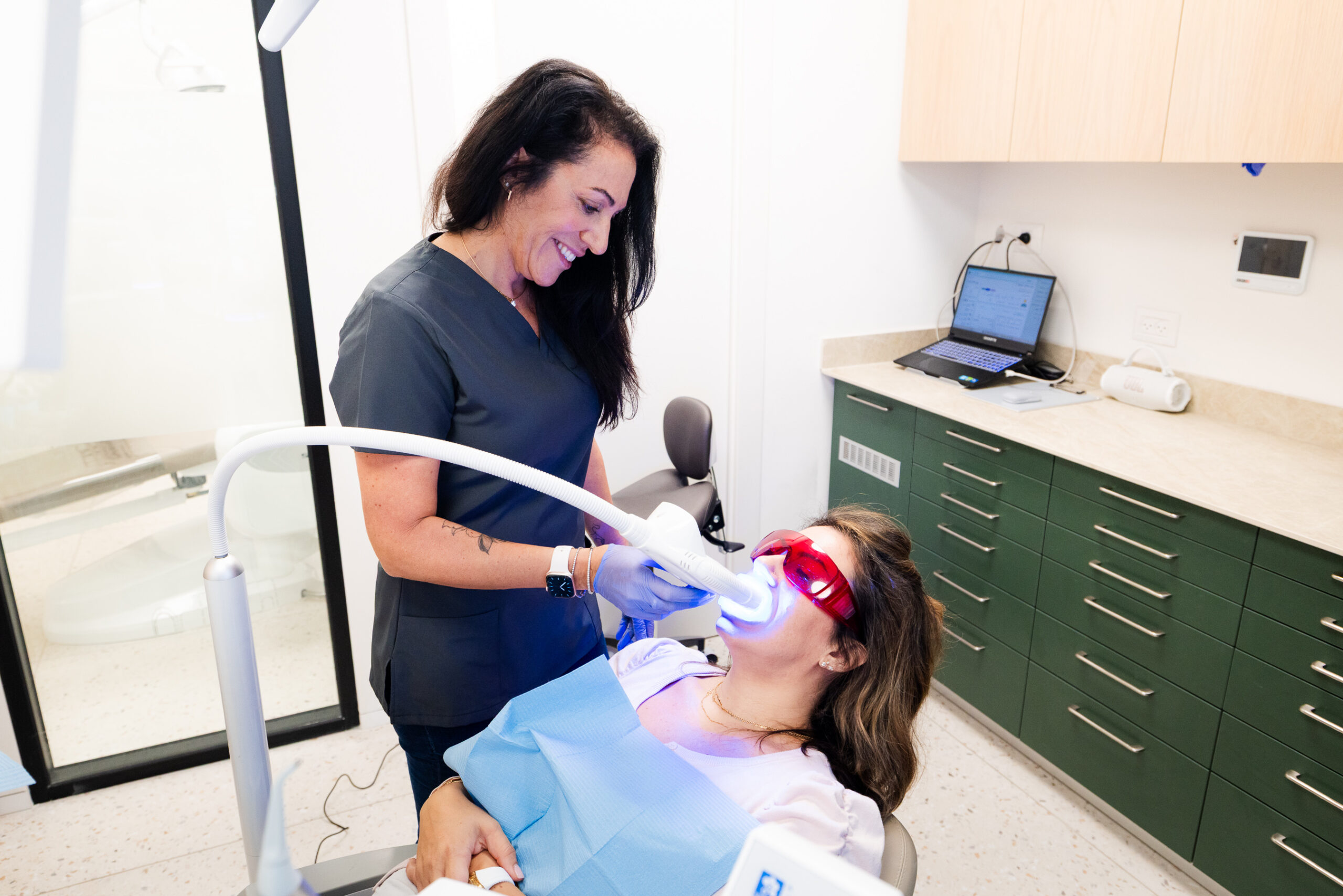
Teeth whitening can lighten the shade of natural teeth. Before choosing a treatment, it helps to understand what caused the discoloration. Surface stains, the underlying tooth shade and existing restorations do not necessarily respond in the same way.
Start with a check of your teeth and gums
Before whitening, your dentist checks that your teeth and gums are suitable for treatment. Pain, existing sensitivity or other problems should be assessed first. It also helps to explain the result you are looking for, whether a subtle change or a more noticeable improvement.
Results depend on the original shade and the type of staining. An exact final shade cannot be guaranteed, and some discoloration does not respond well to whitening.
In-office whitening or custom trays at home?
In the clinic: a whitening agent is applied while the gums and surrounding tissues are protected. The method and number of visits depend on your teeth and treatment plan.
Custom trays at home: your dentist can provide fitted trays and a whitening product, with instructions on how much to use and for how long. The change is gradual. Do not increase the amount or treatment time on your own.
Your preference and ability to follow the instructions also matter. Ask what to expect from each option and how progress will be reviewed.
What happens to crowns, veneers and fillings?
Whitening products do not change the shade of crowns, veneers or fillings in the same way as natural teeth. Visible restorations need to be considered to avoid a mismatch. Sometimes a combined treatment plan is appropriate, depending on the examination and your goals.
Will my teeth feel sensitive?
Temporary tooth sensitivity and gum irritation can occur during or after whitening. If sensitivity becomes uncomfortable, stop using the product and contact the clinic for advice. You do not need to continue a painful treatment to complete the result.
What about whitening products found online?
Not every product or method described as natural is suitable for teeth. Lemon, vinegar and abrasive substances may damage the outer tooth surface. Check with your dentist before trying a new product, especially if you have sensitivity or restorations.
Whitening is not permanent. Smoking, staining drinks and daily care influence the appearance of your teeth over time. At a review, your dentist can assess whether maintenance is needed rather than automatically repeating treatment.
Further reading
NHS: teeth whitening
American Dental Association: whitening options
American Dental Association: natural whitening methods
This article provides general information and does not replace an examination or individual advice. Options, treatment time and results depend on your oral and general health.